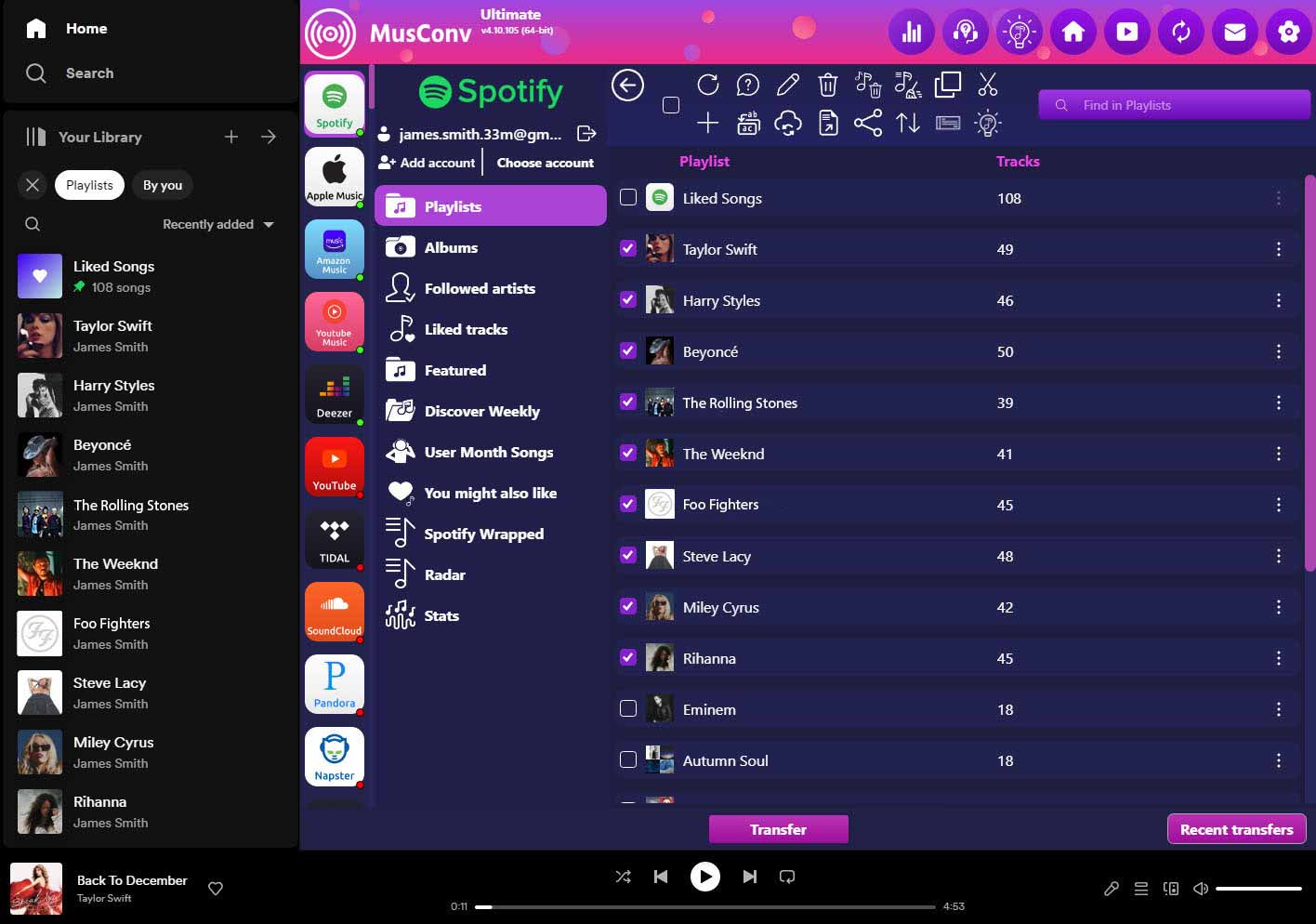
If you become the author of music or a song, then you have a copyright on your work. You can fix it, for example, when placed on a music streaming service that will broadcast your work. For example, when you post your work on the Swedish music streaming service Spotify, you enter into an agreement with a label that will subsequently promote your song or music on this platform.
Such an agreement can be concluded automatically, there are several ways to do this, but now we are talking about how to transfer your copyright when selling or, for example, donating your work.
Undoubtedly, the first of the economic rights of copyright is the right to publish a work. As already mentioned, this right belongs only to the author, but can be transferred.
The same applies to all other economic copyrights, such as, for example, the right to reproduce a work, that is, to replicate it, to create several copies in any form and on any medium. Think also about the ability of the record company that created the digital version of the CD. We are also talking about the right to distribute the work in any way, for example, the right to broadcast a song on the radio and the right to distribute and sell the work in any medium, and so on.
Along with property rights, as already mentioned, there are non-property rights that belong only to the author and can never be transferred (sold or even donated). The main non-property right is the right to be recognized as the author of a work. For some authors, this right is a priority.
The right of authorship of a work, which belongs to its actual author, is not limited exclusively to the private sphere of the individual, but to more general interests: in fact, the prohibition on the transfer of non-property rights guarantees the authorship of the work and its inviolability, not only for the protection of the author himself.
Remember – you must have evidence that you are the creator, and therefore the copyright holder of the content. This is especially important if the conflict turns into a judicial plane. To avoid difficulties, do not ignore the tips to confirm your rights. In some cases, it is acceptable to take independent actions to stop violations, especially if your main goal is to remove illegally posted content.
Many Internet sites (eg YouTube) have developed internal conflict resolution systems. You can file a claim if you believe that the rights to your content have been infringed. For example, if the name of the author was not indicated when using music, he has the right to file a claim against the violator with a demand to stop such actions and compensate for moral damage.
The transfer of copyright to music content occurs according to a well-defined algorithm. In principle, in this case, the procedure is no different from the sale or purchase of any product, which in this case is music.