It’s no secret that Apple Music has long been an integral part of a large number of music lovers around the world, as it offers an extensive library of songs from all genres and directions and is also ideally adapted to various Apple gadgets. But ever since Apple Music Replay came out and users could access their most popular songs and artists by creating a personalized playlist, the music service has grown in popularity.
Everyone knows that Apple Music makes recommendations to users by analyzing their music preferences. This means that the service has certain algorithms for such an analysis. It is with the help of such algorithms that the Apple Music Replay function works. Only the period of time is taken as a basis for a larger one, and no similar songs are recommended, namely, those that this user listened to. Simply put, the service analyzes your listening history over the past year and then creates a playlist of 100 songs that you listened to most often. But Apple Music Replay includes more than just this feature. Here you can find information about, for example, the number of hours you’ve spent listening to music or your popular artists and albums.
Unlike some other platforms that limit how often you can access your listening history, Apple Music Replay is updated every week, while algorithms analyze the music you’ve listened to in real time without the user noticing. This allows you to check your favorite songs and artists at any time. And if you like to take stock of the year, Apple Music Replay also offers a playlist for any year so you can see how your music preferences have changed or just remember what music inspired you.
In general, this is one of the most exciting aspects of Apple Music Replay. For example, you may find that you listen to more hip-hop or indie rock than you thought or that you are drawn to a particular artist or genre. Thus, you can recognize yourself from a different side, not familiar to you before.
Another positive point that users note is immersion in memories and vivid emotions. For example, there may have been a certain song or album that you listened to on repeat while driving or while studying for exams. Sometimes it’s nice to dive into the past.
Of course, some users may be concerned about privacy when it comes to their listening history. But Apple Music Replay takes these issues seriously and allows you to opt out if you prefer not to analyze your listening history. And for those who choose to use this feature, Apple Music Replay only analyzes your listening history on the device that has it enabled.
Apple Music Replay is available to all Apple Music subscribers, both free and paid. You can find Replay inside the Apple Music app on your iPhone, iPad, Mac, or Windows device.
Is there an automated way to switch streaming platforms without losing my music?
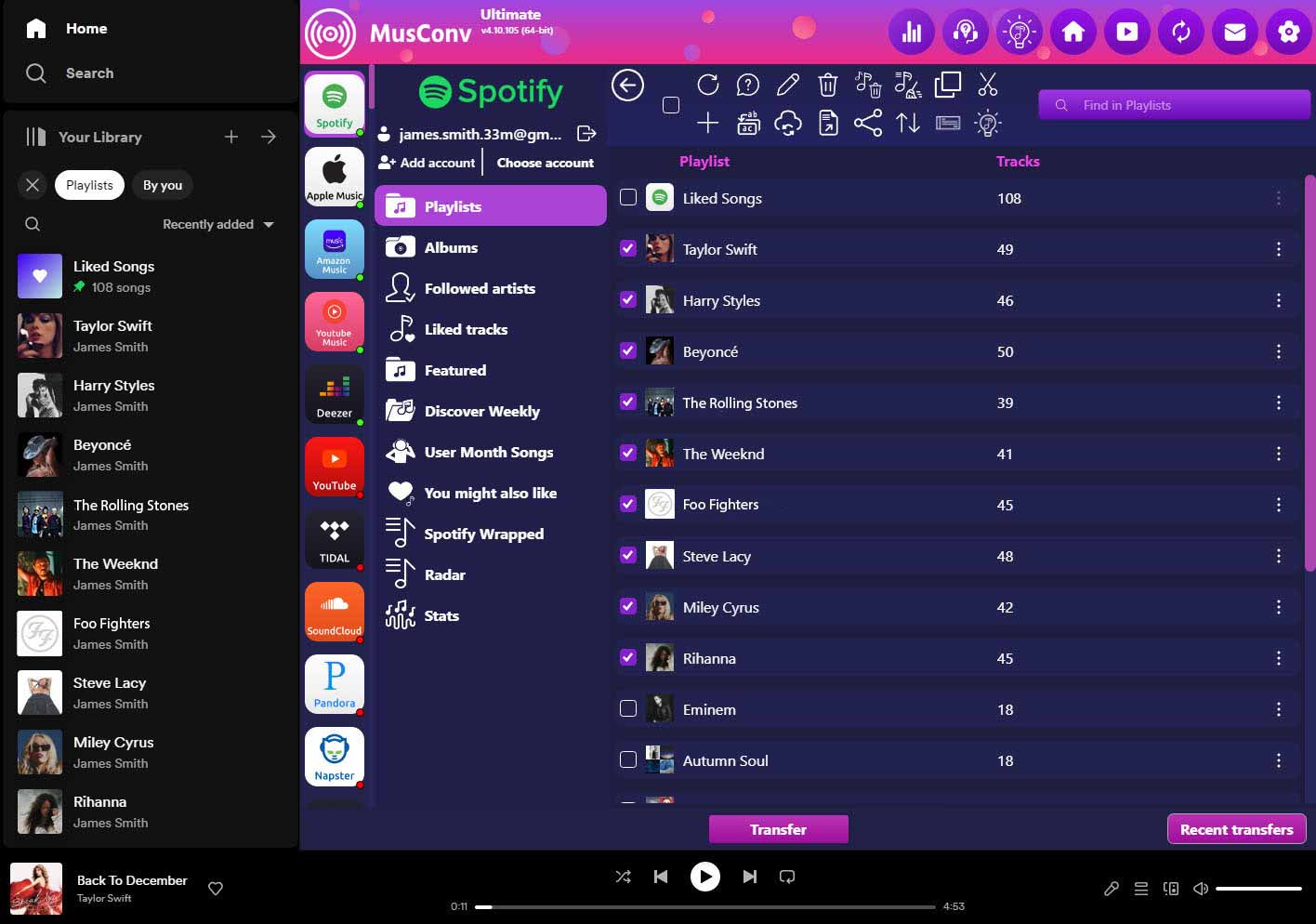
MusConv connects your accounts like a bridge, making it easy to sync and move your music across different platforms.
Can I filter which specific content gets moved to the new account?
Yes, the tool offers flexible migration settings. You can opt to transfer your entire history or handpick only certain artists and albums to ensure your new profile stays clutter-free.
What is the best way to track songs that fail to sync?
MusConv generates a comprehensive "missed tracks" log after the process. This report highlights any music unavailable due to regional restrictions, so you can manually find covers or alternative versions.
Will the tool preserve my custom sorting and folder hierarchy?
Definitely. The software is designed to read and replicate your metadata precisely, ensuring that your curated track sequences and organizational structures remain identical on the destination platform.