Qobuz claims to have nearly 100 million CD-quality tracks and millions of high-resolution songs in its library. Articles, interviews, and reviews are also available, providing valuable content for music lovers. However, according to user reviews, many games are not available. Qobuz is very widely used in Europe but has a smaller library in the US. Tidal claims to have more than 100 million books and more than 250,000 videos in its library. By subscribing to Tidal, you’ll get access to more exclusive content like music videos, behind-the-scenes footage, and even concerts.
Qobuz Price
1. Individual: $14.99 monthly subscription. If you subscribe for 12 months with a one-time payment of $149.99, the monthly subscription cost will be $12.49 per month. 2. Duet: Music in high definition for two. Monthly subscription for $19.99 per month. Starting at $17.50 per month, with a one-time payment of $210 for 12 months. 3. Family: Members of the same family can use up to six Qobuz accounts in one subscription. $24.99 per month; with a one-time payment of $249.99, you’ll only need to pay $20.83 per month.
Tidal Price:
1. Hi-Fi: Individual – $10.99/month, Family – $16.99/month, Student – $4.99/month, First Responders & Military – $5.99/month. 2. HiFi Plus: Individual – $19.99/month, Family – $29.99/month, Student – $9.99/month, First Responder & Military – $11.99/month.
Sound quality
Audio Quality. When it comes to high-resolution audio, both Qobuz and Tidal offer excellent options. Qobuz offers lossless FLAC streaming up to 24-bit/192kHz, while Tidal offers a similar FLAC streaming quality with a maximum of 24-bit/96kHz. However, it’s worth noting that not all tracks on either service are available in high-resolution, so it’s important to check the quality of individual tracks before streaming.
Tidal works seamlessly with smartphones, tablets, computers, network players, smart TVs, and various home audio systems. Secondly, it also offers Tidal Connect, which allows users to stream music directly from the TIDAL app to compatible devices. Qobuz can work on smartphones, tablets, computers, and network players; it can also be integrated directly into Wi-Fi streaming.
Interfaces
Qobuz’s interface is clear and simple, without flashy graphics, making it easy for beginners to use and providing quick access to music. Tidal has a sleek and intuitive interface and offers personalized content based on your personal preferences. The focus is on personalized recommendations and content created by experts. As you can see, it is impossible to say unequivocally which of the described music streaming services is better. It all depends on the individual preferences of the individual music lover, but Tidal is cheaper and, most likely, this is its only advantage in this case. Therefore, the final verdict on choosing the best music streaming service rests with the user, who will receive a decision based on your individual preferences.
Social features
In today’s society, we love social networks and can interact with others through all our applications, including music streaming services. So, let’s talk a little about the social aspects of Qobuz and Tidal.
Qobuz fans previously complained about the lack of available social interaction. For this reason, in 2023, Qobuz launched the “Qobuz Club” feature. This allows Qobuz subscribers to interact, bringing together music lovers and audiophiles. With this social feature, you can share your musical preferences with others, discover new music and recommendations, and also receive advice on Hi-Fi and hardware.
In 2023, Tidal also launched a new social feature called Tidal Live. With this social feature, you can act as a DJ and create your own musical content to share with others. When you listen to a favorite song, you can press the “Live” button in the top right corner and create your own music session. From there, you can give your session a name and share a link with friends. Whatever songs you queue up as “Now Playing” become part of your session. As the initiator of the DJ session, you are the only one allowed to make changes to the song lineup. An additional feature of Tidal is that you can also share the songs you listen to on social networks, making musical expression interesting for Tidal users.
WINNER: The winner of this round is… both! We can handle this, considering that Qobuz has an internal feature similar to social networks, covering a wide range of different topics, and Tidal can share songs you listen to on multiple social networks.
In conclusion, both Qobuz and Tidal present compelling options for music enthusiasts seeking high-resolution audio streaming. The decision between the two ultimately hinges on personal preference, with each service offering its own set of unique features and benefits.
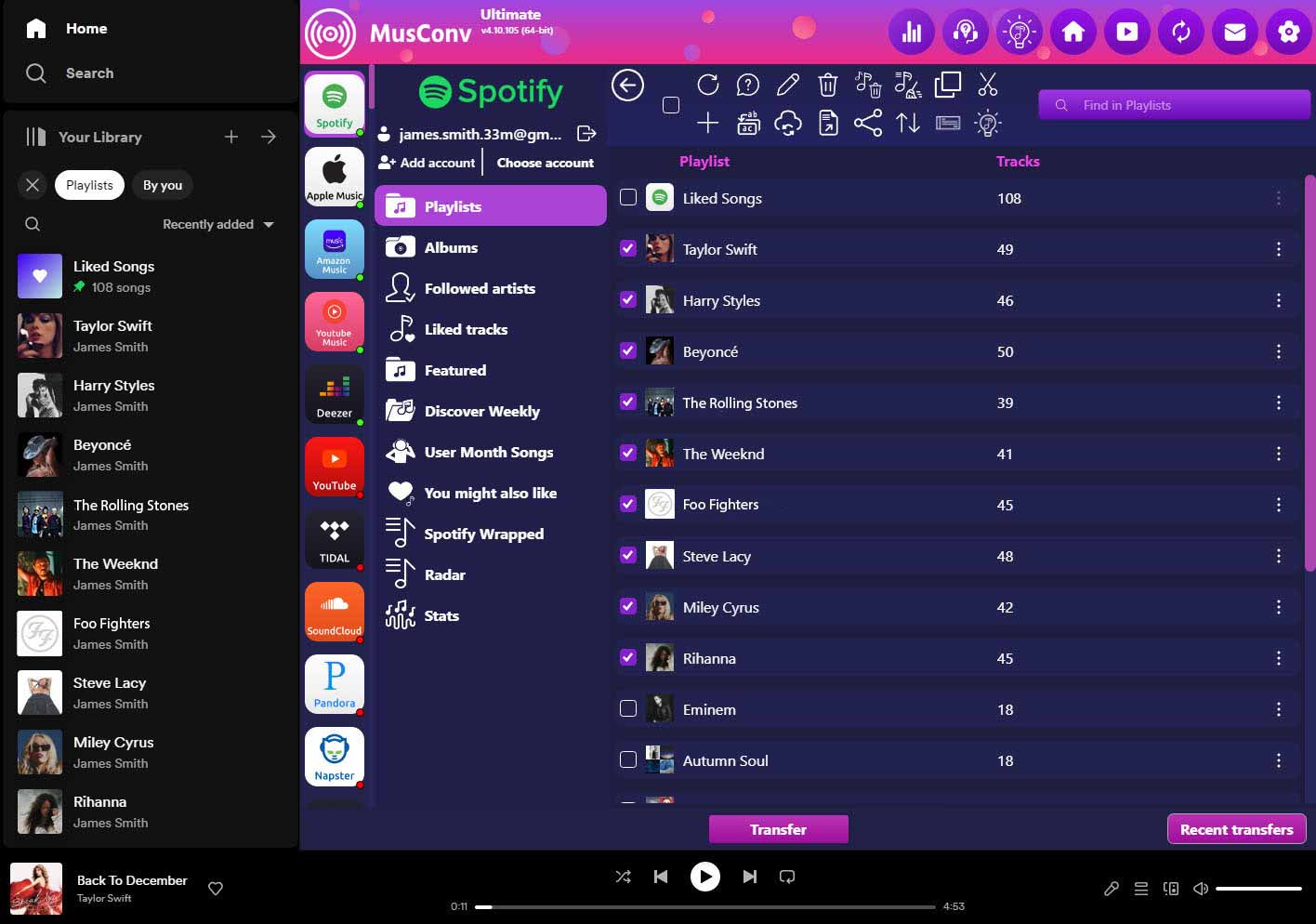
Enhance your playlist transfer process with MusConv, the premier service for effortless migration. Sign up for a monthly subscription, access premium features, and easily cancel whenever you like. Unleash the complete power of MusConv’s playlist migration functionalities.
Does MusConv support the migration of followed artists and podcast feeds?
Yes, the software is programmed to recognize your subscribed creators and followed artists, making it easy to rebuild your social profile and custom recommendations on the new app.
Will migrating my music with MusConv disrupt my future "wrapped" statistics?
Since the tool adds these songs directly to your profile, the new platform's algorithm begins analyzing your tastes immediately, ensuring your future discovery features remain accurate.
Can I transfer curated algorithmic mixes using this application?
Yes. If you first save those dynamic, automated recommendations as standard playlists in your source account, the tool can easily grab and migrate them.
What kind of licensing options are available for MusConv users?
The software offers highly flexible options. You can choose a short-term pass for a quick, one-time platform switch, or a continuous license for scheduled backups and syncs.