Honestly, choosing between YouTube Music and SoundCloud in 2026 feels a bit like deciding between a massive corporate department store and a chaotic, underground flea market. Both sell music, but the experience is worlds apart. If you are looking for a straightforward answer – there isn’t one. It all depends on whether you want the polished, algorithm-driven safety of Google’s ecosystem or the raw, sometimes messy, but undeniably authentic vibe of independent creators.
The Google Juggernaut: YouTube Music
YouTube Music has come a long way since it replaced Google Play Music years ago. By now, it has basically perfected the art of the recommendation engine. It knows what you want to hear before you even do. That’s the power of having all that Google search data, isn’t it? If you spend your day watching music videos or live performances on YouTube, the integration is seamless. You get the official studio tracks, but you also get those obscure live versions from a concert in 1994 that nobody else has.
The interface is clean… maybe a little too clean for some. It feels like a product designed by a committee of people who really love white space and rounded corners. But it works. The search feature is arguably the best in the business. You can type in some half-remembered lyrics or even describe the music video, and it will usually find the song. It’s a bit of a lifesaver when you have a melody stuck in your head but can’t remember the artist for the life of you.
However, there is a catch. The “premium” price has ticked up again lately. You are paying for the privilege of no ads and background play, which feels like a bit of a steep ask given how much they already know about us. But then again, you get YouTube Premium bundled in, which means no ads on the video side either. At the end of the day, that’s a deal that’s hard to beat if you consume a lot of video content.
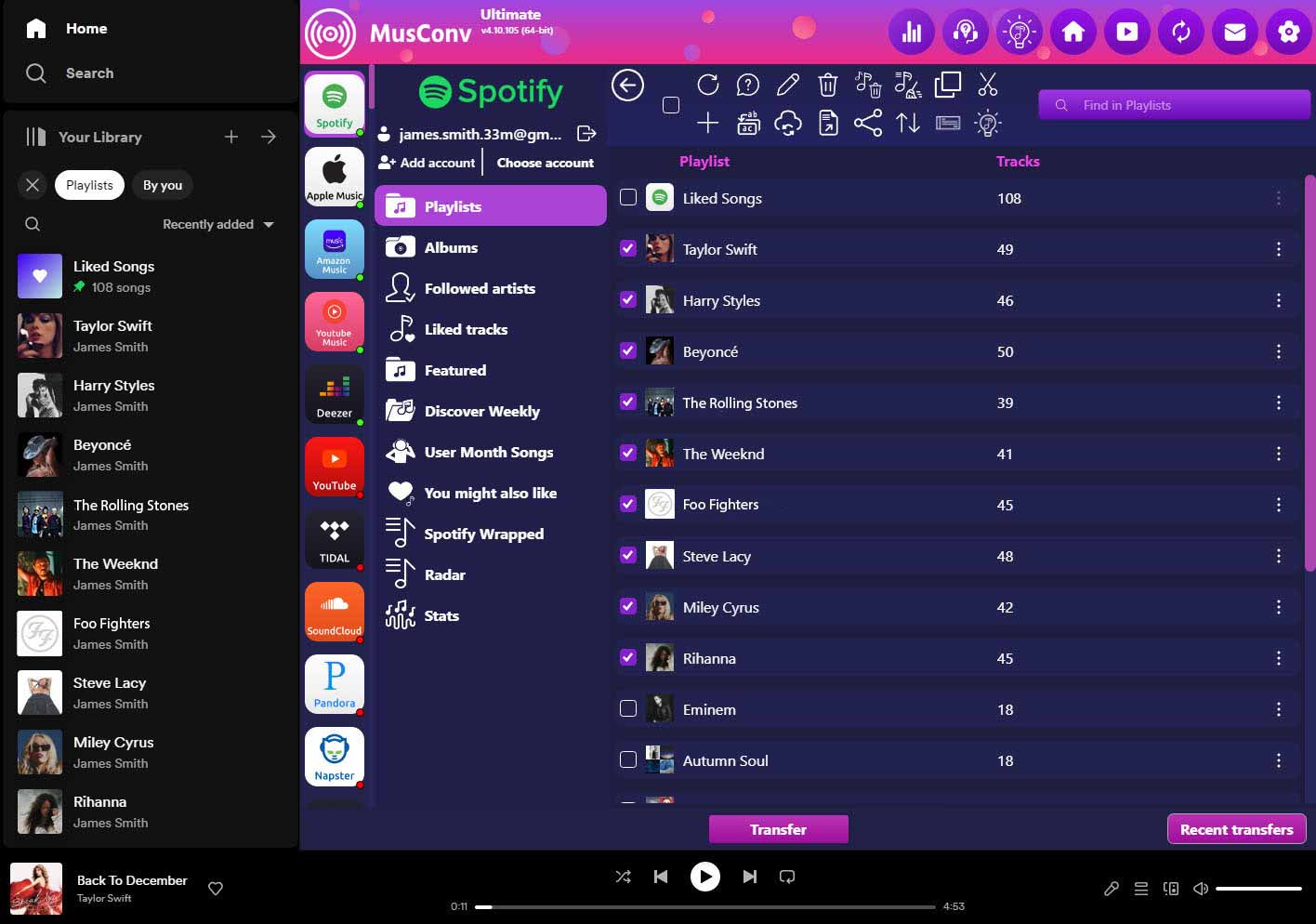
If you’re currently sitting on a massive Spotify or Apple Music library and the thought of moving to Google’s platform makes you break out in a cold sweat, don’t worry. There’s a pretty clever utility out there called MusConv. It’s essentially a specialized data mover that grabs your playlists from your old service and rebuilds them in your new home. It’s much more reliable than those weird free websites that usually fail halfway through a 500-song transfer.
The Wild West of Audio: SoundCloud
The biggest draw here is the community. The comments section actually matters. Seeing a timestamped comment where someone says “this drop is fire” at exactly 2:14 creates a sense of connection that you just don’t get on the bigger platforms. It feels human. It’s flawed, sure… sometimes the audio quality is questionable because someone uploaded an MP3 they recorded on a laptop mic, but that’s part of the charm.
SoundCloud Go+ is their premium offering, and while it gives you access to a “mainstream” catalog, that’s not really why people are there. You go to SoundCloud for the remixes, the bootlegs, and the stuff that would get taken down by copyright bots on YouTube in five seconds. It’s the frontier. But it can be a headache to navigate. The search is… well, it’s not Google. You have to know exactly what you’re looking for, or you’ll end up in a rabbit hole of low-quality trance mixes from 2012.
For the folks who have spent years digging through the crates on SoundCloud and now want to bring those rare finds into a more organized environment, there is a solution. You can use a tool like MusConv to sync those obscure tracks and curated sets over to other platforms. It acts like a digital bridge, making sure your hard-earned musical discoveries don’t stay trapped in one app. It’s a solid way to keep your library portable without losing your mind.
Sound Quality and Tech Specs
Let’s get technical for a second, though I’ll keep it simple. YouTube Music streams at 256 kbps AAC. In 2026, that sounds “fine” to most people. It’s not high-res, and it’s not lossless, but if you’re listening on Bluetooth earbuds while commuting, you won’t care. SoundCloud, on the other hand, is a bit of a mixed bag. Their high-quality streaming is also around that 256 kbps mark, but the actual quality depends entirely on what the artist uploaded.
If you are an audiophile, neither of these is going to be your primary choice. You’d probably head over to Tidal or Qobuz. But for the 99% of us who just want music that sounds decent and doesn’t buffer, both do the job. YouTube Music wins on stability, though. Their servers are backed by Google’s massive infrastructure, so they almost never go down. SoundCloud still feels a bit more “indie” in its backend, which can lead to the occasional glitchy playback during peak hours.
If you find yourself constantly switching between these two because you love the discovery on one but the convenience of the other, you might want a way to keep them in sync. A program like MusConv can actually handle that. It’s a desktop application that manages the logistics of your music library, allowing you to mirror your SoundCloud likes into a YouTube Music playlist. It basically takes the manual labor out of being a music nerd.
The Price of Admission
Money matters. YouTube Music is often tied into a larger family plan, which makes it incredibly cheap per person if you have five friends or family members to split it with. SoundCloud’s pricing is competitive, but they don’t have the same “bundle” power. You’re paying for the music and the artists, and they tend to pay their creators a bit better (or so they claim).
Is it worth paying for both? Honestly, probably not. Most people should pick the one that fits their lifestyle. If you want the most “bang for your buck” and you already watch a lot of YouTube – go with Google. If you consider yourself a bit of a tastemaker and you want to support artists before they hit the mainstream – stick with SoundCloud.
In the event that you realize you’ve made the wrong choice after six months, you shouldn’t feel locked in. Moving your data is much easier now than it used to be. You can use a service like MusConv to pack up your digital bags and move to a different provider. It’s a straightforward piece of software that avoids all the typical marketing fluff and just gets the job done by matching your song titles across different databases.
Read also: Algorithmic Audio: Unlocking the Power of the AI Music Maker for Brands and Creators