Resso is a music streaming app that was relatively recently created in China. Its author was a company that created a popular video service and became, in 2026, the most promising startup not only in China but throughout the world. Just like accessing TikTok, the app looks so intuitive and full of visuals that it doesn’t get boring. And it’s only natural that loyal TikTok users quickly adapted to Resso.
Breaking Down The Catalog And Licensing Hurdles
The Resso music catalog at this initial stage is still inferior to existing players. Searching for songs outside of the pop, rock, and hip-hop genres isn’t as rich as Spotify or YouTube Music. Previously, the company was in the process of signing contracts with three global labels: Universal, Sony, and Warner regarding music licensing.
Interestingly, you can add a list of songs you like and share your own song along with selected lyrics on other social media platforms. Before uploading, you can choose which parts of the song, be it the intro, verse, or chorus, you want to share. If you plan to put your own song on the streaming service, you will need to fill out an official application form.
You can also choose a font effect, change the background of the song’s cover art with a selection of videos, or download content from the internal gallery. Self-actualization activities will undoubtedly be the highest for Generation Z.
We can say that this ability for users is relatively new and has not been introduced by any existing music streaming service.

In India, which is also Resso’s target market, this feature is also provided by local music streaming app Gaana.
Social Features And Premium Perks
Another thing that Resso introduced is the insertion of social media features. You can comment on your favorite songs and chat with other users in the same column.
Like most music streaming apps, Resso is a paid app. In terms of price, it’s a bit cheaper with Spotify’s offerings but the same as YouTube Music’s and Joox’s offerings.
There is a free trial for 14 days before upgrading to premium. You only get charged one month (30-day free trial) after signing into your billing account, either with Google Wallet or with credit.
To become a premium user, Resso offers an unlimited selection of songs. You can download songs without ads, without restrictions, and with high-quality audio tracks. This proposal is not much different from others.
Users only see how complete the Resso catalog is and how the app gets smarter by providing song recommendations according to preferences. A more complete catalog will lead people to the transition. To this streaming platform from other music streaming services.
Conclusion
It remains to be seen if Resso can truly topple the giants like Spotify in the long run, but for now, it’s clearly carved out a niche for the younger, more social-oriented listener. The app feels less like a sterile database of tracks and more like a living, breathing community. Whether you are there to upload your own creations or just to vibe with other fans in the comments, the experience is definitely unique. However, the success of any platform like this eventually boils down to how easy it is for people to actually use it without feeling like they are starting their musical life from zero.
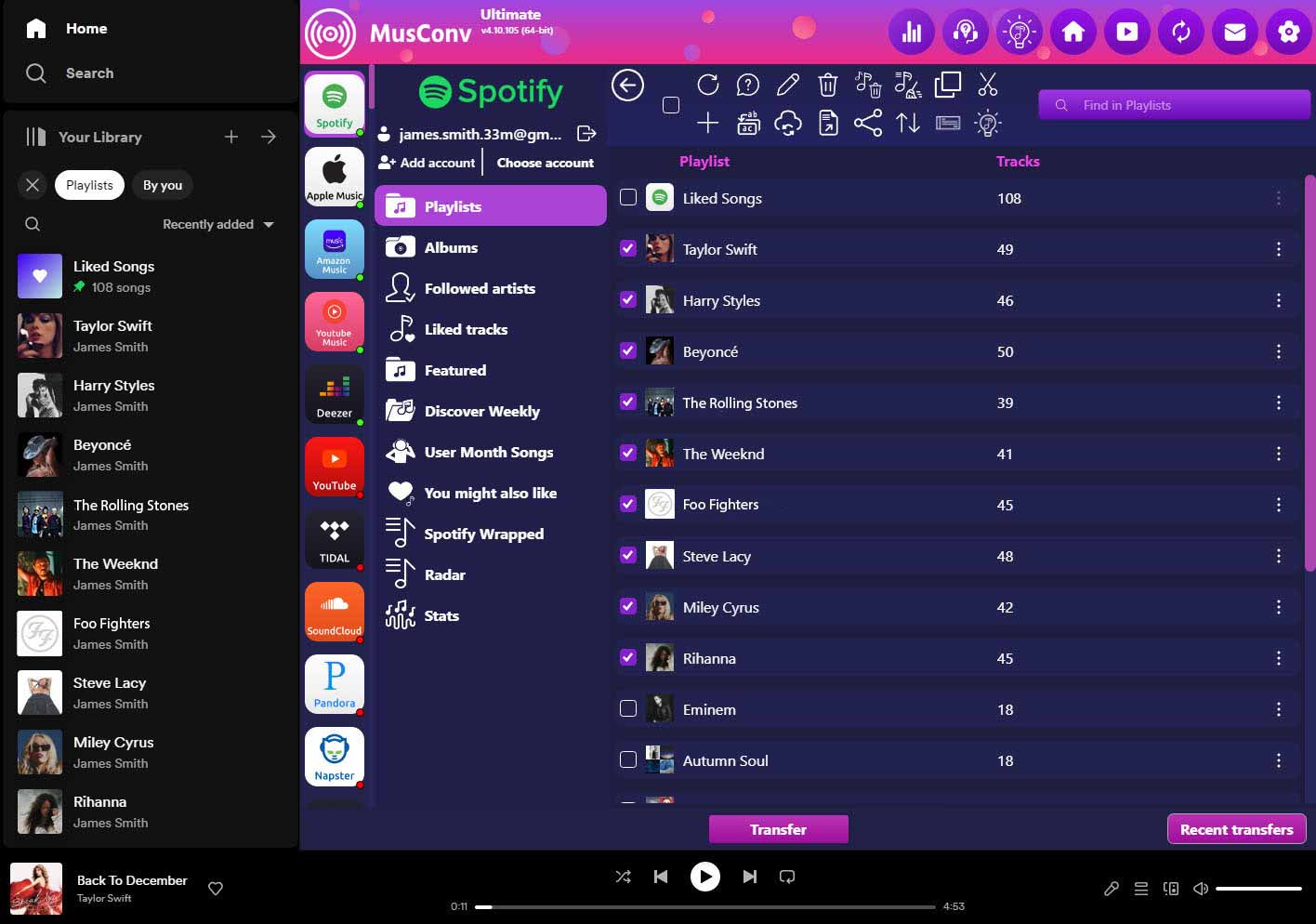
If you find yourself wanting to make the jump to Resso but are dreading the thought of leaving your years of curated playlists behind on your old app, there are ways to fix that. This is where a specialized tool like MusConv comes in handy. It’s an incredibly efficient software that allows you to migrate your entire music library between different streaming services in just a few clicks. Instead of wasting hours manually searching for every single track, you let this utility do the heavy lifting, ensuring your transition to a new platform is as smooth as possible. It’s a real “life-saver” for anyone who wants the freedom to explore new apps without losing their favorite tunes.
Ultimately, Resso is a bold experiment in merging social media with high-fidelity streaming. It’s got that “TikTok energy” that feels fresh and exciting, even if it’s still finding its feet in terms of global licensing. If you are tired of the same old interfaces and want something that actually lets you interact with the music you love, it’s well worth a look; just make sure you have your playlists ready to go.
Additional FAQ on Working with Resso
- What should I do if my track was rejected by moderators during the review stage?
A release rejection is not a reason to panic but a standard part of the workflow. Most often, the reason lies in technical non-compliance. Carefully examine the notification from your distributor. If the claim concerns the cover art (for example, the text is too small, the image is blurry, or it contains third-party brand logos), you simply need to replace the graphic file with a higher quality and cleaner version. If the issue is with the copyrights of a used sound fragment, you will either need to provide a document confirming your right to use the sample or rework the arrangement. The main thing is not to try uploading the same file again without changes, as this can lead to a temporary suspension of your account. Work on the specific feedback provided, and the release will eventually pass the check. - How do I correctly fill in the track data so that users can find it more easily?
Metadata is the digital passport of your composition, and its accuracy determines your success in search results. When filling out the form with your distributor, be sure to indicate not only the main title and the artist’s name but also everyone involved in the creation: composers, lyricists, arrangers, and featured vocalists. The more detailed the card is filled out, the more effectively the recommendation algorithms work. It is important to avoid using all capital letters (Caps Lock) unless it is part of your officially registered stage name. You should also avoid adding unnecessary notes to the title, such as “New 2026” or “Premiere,” as platform moderators consider this informational noise and may reject the application. Clean data is the key to getting into thematic playlists. - Is it possible to replace the audio file or cover art after the song has become available to everyone?
The technical ability to make edits to already published content exists, but this process takes some time. To make changes, you need to go to your distributor’s management panel and select the release editing function. You can upload a higher-quality mastering version or completely change the visual design of the single. After the edits are submitted, the track is sent back for moderation by the service staff. During the update period, which can last up to ten business days, the song may display the old data or temporarily disappear from search in some regions. Play statistics are usually preserved if you haven’t changed the unique identification codes (ISRC), so your popularity metrics will not suffer. - Does having a paid subscription for the artist themselves affect the promotion of their music?
Having a premium account as a user does not directly give your tracks any advantage in algorithmic distribution. The service’s bots are completely impartial: they analyze the behavior of real listeners, the depth of track listening, the number of saves to favorites, and the frequency of shares. However, having a paid subscription is useful for an artist’s professional growth. It allows you to study the profiles of successful competitors in your genre without ads or restrictions, analyze their visual techniques, and promptly respond to comments under your works. For promotion, it is much more effective to focus on external activity: attracting an audience from other social networks and motivating your fans to add your new releases to their personal playback lists. - How do I create the perfect background video (Vibe) for my song?
The short looping video feature is a unique tool for audience engagement in 2026. To create a high-quality video, prepare a sequence lasting from 5 to 60 seconds. The video must be strictly vertical (9:16 aspect ratio) and convey the mood and rhythm of the composition as accurately as possible. Try to avoid excessively fast cuts or bright flashes, as this can distract from listening and strain the eyes. Many successful artists use either fragments of official music videos or atmospheric looping animations. Remember that the song lyrics will be overlaid on this video, so the central part of the frame should not be overloaded with small details; otherwise, the lyrics will become unreadable. A well-chosen visual sequence can increase the listener’s retention time on your track’s page several times over.
Read also: Why Do Rappers Carry Cash?