When people think of Tidal, they usually think of expensive hi-res audio and Jay-Z. But as we move further into 2026, the service has evolved into something much more focused on the actual experience of discovering music rather than just the technical specs of the file. Tidal Radio is a perfect example of this shift. It is not “radio” in the traditional sense – you won’t hear a fast-talking DJ telling you about a local car dealership – but it is an algorithmically generated stream that tries to mimic the flow of a well-curated broadcast.
How Tidal Radio Actually Works
The mechanic behind it is pretty straightforward, though the math involved is anything but. When you start a “Radio” station based on a track, an artist, or an album, Tidal’s engine looks at the metadata and the listening habits of millions of other users. It tries to find songs that share the same “DNA.” If you start a station from a 70s soul track, it won’t just play more 70s soul. It might throw in a modern R&B track that samples that specific era or a jazz piece that influenced the artist. It is meant to be a journey, not just a loop.
The beauty of it lies in the subtlety. Unlike some other platforms that tend to play it safe by giving you the same ten hits over and over again, Tidal’s radio feature feels a bit more adventurous. It is like the difference between a grocery store playlist and a cool independent record shop. You get the sense that the system actually respects your ears. However, it isn’t perfect… sometimes it can get stuck in a bit of a genre rut if you don’t interact with it. You have to “train” it by liking or skipping tracks to get the best results.
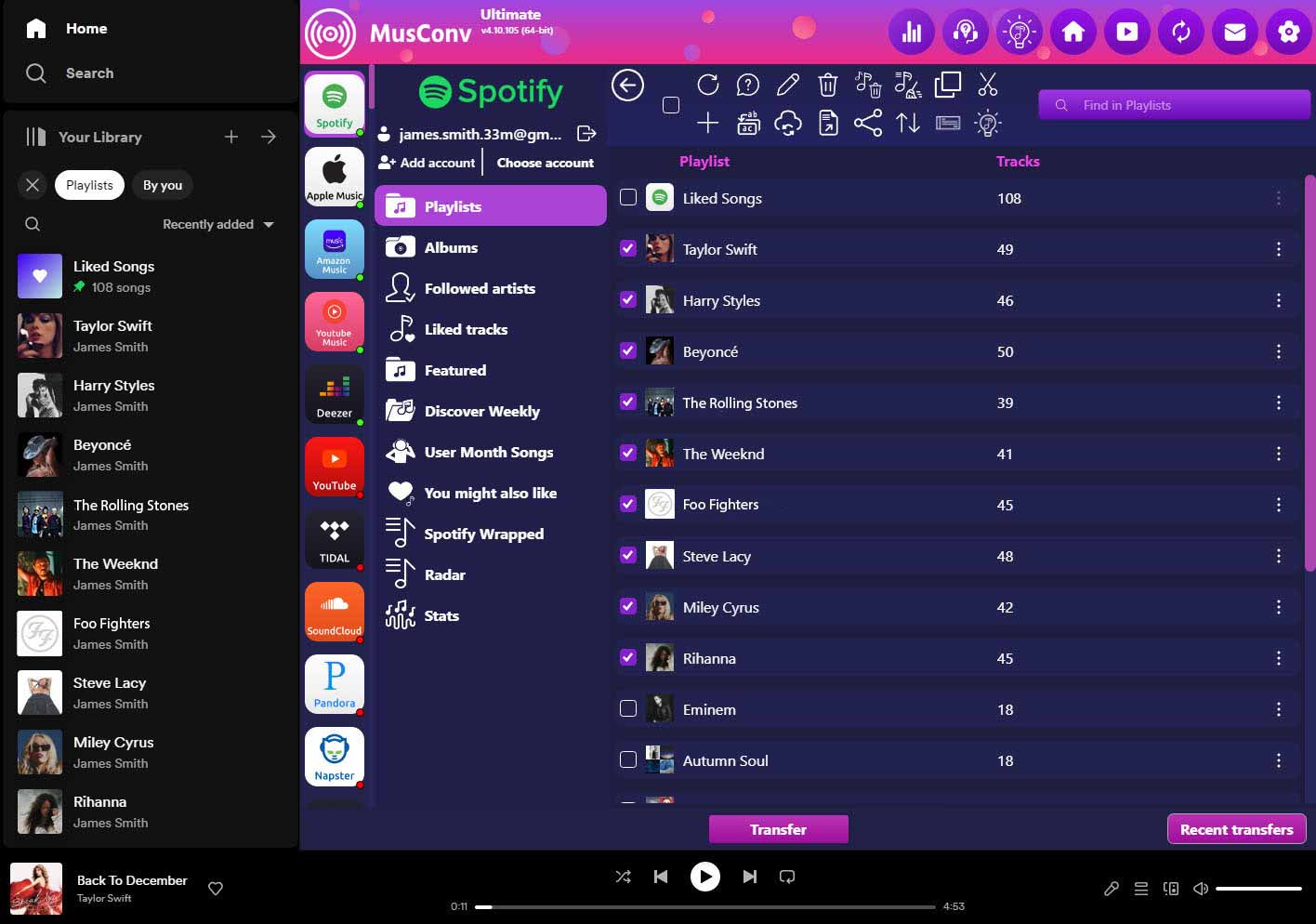
If you are thinking about moving your entire musical life to Tidal just to experience this level of curation, you might be dreading the thought of leaving your Spotify playlists behind. Moving thousands of songs manually is a total nightmare. This is where a handy utility called MusConv comes into play. It acts as a sort of digital middleman, grabbing your data from your old service and rebuilding your entire library within Tidal’s high-fidelity environment. It saves you an incredible amount of time, especially if your collection is massive.
The Different Flavors Of Radio On Tidal
Tidal doesn’t just give you one type of radio. They have “Track Radio,” “Artist Radio,” and even “Album Radio.” The “Artist Radio” is particularly interesting because it doesn’t just play that one artist’s discography. It builds a context around them. If you launch a station for a niche indie band, you will hear their contemporaries, their influences, and maybe even some newer acts they’ve toured with. It is a great way to find new music without having to do the heavy lifting of searching for it yourself.
In 2026, they’ve also leaned heavily into “My Mix.” These are basically personalized radio stations that update constantly based on your recent activity. If you’ve been on a heavy metal kick for three days, you’ll find a “My Mix” dedicated to that. If you suddenly switch to classical music to study… well, the algorithm catches on pretty quickly. It is a “set it and forget it” kind of feature that actually works most of the time. Honestly, it is one of the few things that justifies the higher subscription price.
Now, for those who are worried about losing these carefully tuned mixes if they ever decide to switch platforms again – you shouldn’t be. You can use specialized software tools like MusConv to export these generated lists into other formats or services. It is a very practical way to “capture” the algorithm’s work so you can take it with you wherever you go. It basically turns your streaming history into a portable asset rather than something locked behind a single app’s wall.
Human Touch In A World Of AI
While most of Tidal Radio is driven by algorithms, there is still a heavy influence from their editorial team. They have “hand-curated” stations that are actually put together by humans who know their stuff. This is where Tidal really shines. When a machine picks music, it looks for patterns. When a human picks music, they look for a feeling. That human element is what makes some of their genre-specific stations feel so much more authentic than the competition.
At the end of the day, music is about connection. Tidal seems to understand that. They don’t just want to be a utility; they want to be a destination for people who really care about what they are listening to. Whether you are using the radio feature to find a new favorite artist or just to provide some background noise while you work, the quality is consistently high. It is a bit of a “cut corners” world out there, but Tidal still feels like it’s putting in the effort.
If you’ve spent years building a profile on another service but find Tidal’s curation more appealing, the transition is easier than you think. There’s a clever piece of software known as MusConv that specializes in these kinds of migrations. It logs into your accounts and handles the synchronization between the two, making sure your “Top 100” and your specialized playlists show up in your new home without a hitch. It is a straightforward solution for a complex problem.
Comparing Tidal Radio To The Competition
Is it better than Spotify’s “Radio” or Apple Music’s “Stations”? It depends on what you value. Spotify is great for popularity – it plays what people like. Apple Music is great for mainstream polish. Tidal is for the discovery of the “under-the-radar” stuff. It feels more “indie,” even though it is a massive global platform. In 2026, as algorithms become more and more intrusive, Tidal’s approach feels a bit more respectful of the listener’s intelligence.
Of course, the price is always the elephant in the room. Tidal isn’t cheap. But if you value sound quality and a discovery engine that doesn’t treat you like a demographic, it is worth the investment. It’s a “you get what you pay for” situation. And if you ever find that the price becomes too much, you can always move your library elsewhere using a migration assistant. A tool like MusConv can help you pack your digital bags and move your curated history to a more affordable service if needed. It keeps you in control of your data, which is a big deal in this day and age.
Read also: Algorithmic Audio: Unlocking the Power of the AI Music Maker for Brands and Creators